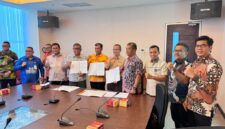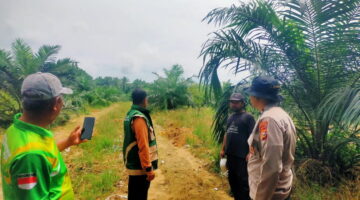







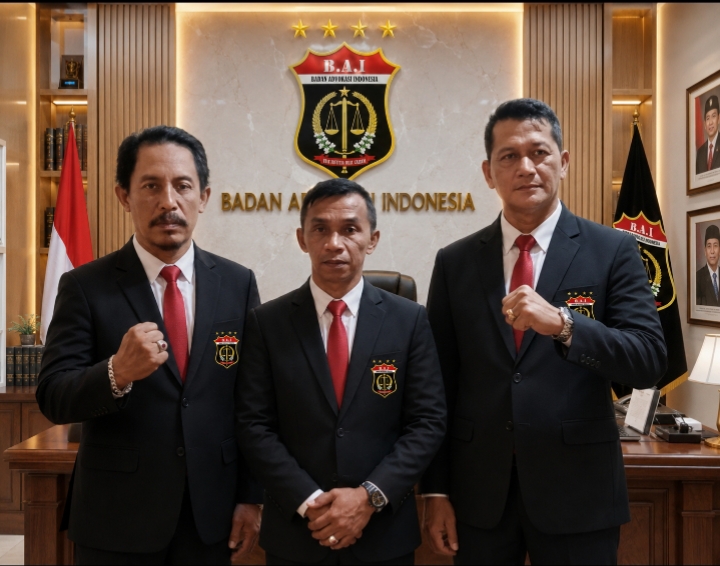
Aceh Tamiang, Indonesia – The Regional Executive Board of the Indonesian Advocacy Agency (DPC BAI) Aceh Tamiang has responded to the controversy surrounding a statement made by the Head of the Aceh Education Office in Banda Aceh, Murthalamuddin, who said that journalists without a Journalist Competency Test (UKW) certificate do not need to be responded to by school principals currently managing post-disaster rehabilitation and reconstruction projects while carrying out journalistic duties, as well as NGOs. The statement was recorded in a 1-minute and 57-second video uploaded to Murthalamuddin’s Facebook account on Thursday (21/05/2026).
The statement sparked various reactions from journalists, NGOs, and the public. In response, DPC BAI Aceh Tamiang urged all parties to address the issue wisely while continuing to respect press freedom as guaranteed under the law (Law No. 40 of 1999 on the Press) and Law No. 14 of 2008 on Public Information Disclosure, particularly Article 4, which states:
- Every person has the right to obtain public information.
- Every person has the right to:
- see and access public information;
- attend public meetings open to the public;
- obtain copies of public information;
- disseminate public information in accordance with regulations.
3. Applicants for public information have the right to submit information requests along with the reasons for the request.
4. If obstructed, applicants may file a lawsuit or information dispute.
Chairman of DPC BAI Aceh Tamiang, Syamsul, also stated that the UKW is indeed important as an effort to improve the quality and professionalism of journalists. However, according to him, journalistic duties must still refer to the provisions of Press Law No. 40 of 1999 and the journalistic code of ethics applicable in Indonesia.
“UKW is an instrument to improve journalists’ competence, but it should not create perceptions that could trigger division between the press and the government. All parties must respect each other’s professions and duties,” he said.
Satria, Head of Legal and Human Rights at DPC BAI Aceh Tamiang, also emphasized that there is not a single article in Law No. 40 of 1999 on the Press that states journalists are required to possess a UKW certificate in order to conduct journalistic activities.
“UKW is merely a professional competency standard established by the Press Council, not a legal requirement to become a journalist.
The legal basis is: Articles 1 and 7 of the Press Law only regulate that journalists carry out journalistic activities and comply with the Journalistic Code of Ethics — there is no obligation to have UKW,” said Satria.
DPC BAI Aceh Tamiang also believes that NGOs and journalists play an important role as conveyors of information, social control agents, public educators, and part of the pillars of democracy. Therefore, good communication between public officials, NGOs, and the press is considered essential in maintaining transparency of information for the public.
In addition, Julliardi, Head of Investigation at DPC BAI Aceh Tamiang, encouraged NGOs and journalists to continue improving their competence and professionalism through training and UKW programs so that the quality of reporting becomes better, more accurate, and balanced.
“We must not let this polemic create misunderstandings within society. The most important thing is how all parties can work together to maintain a healthy, professional, and independent press climate,” he stated.
DPC BAI Aceh Tamiang hopes that the controversy surrounding the statement can be resolved through dialogue and mutual respect among all parties, so that the partnership between the government, NGOs, and the media can continue harmoniously for the public interest.
(Saut Simanjuntak)